
Underground Fuel Tanks: Types, Applications, and Key Selection Considerations
Underground fuel tanks are an essential fuel-storage solution for many fuel stations, industrial facilities, and projects that require tanks to be installed below ground level. Selecting the appropriate tank depends on the nature of the project, the type of liquid being stored, site conditions, operating requirements, and the applicable specifications and regulations.
Choosing an underground fuel tank does not begin with capacity alone. It starts with understanding the environment in which the tank will operate and the system to which it will be connected, followed by determining the design and configuration that best suit those requirements.
What Are Underground Fuel Tanks?
Underground fuel tanks are storage tanks installed below ground level to store fuel and other flammable or combustible liquids for applications permitted by the relevant specifications and standards.
The requirements for a buried tank differ from those for an aboveground tank because the design must account for burial conditions and the loads and pressures surrounding the tank, in addition to corrosion protection, leak prevention, installation, and inspection requirements.
UL 58 is one of the standards used for underground steel tanks intended for flammable and combustible liquids.
What Types of Underground Fuel Tanks Are Available?
Underground fuel tanks vary according to their manufacturing method, configuration, required level of containment, and the nature of the project.
1. Single-Wall Tanks
A single-wall tank consists of one storage shell containing the stored liquid. Its use is determined by project requirements, site conditions, and applicable regulations.
A single-wall tank should not be selected on price alone. The nature of the project, protection and containment requirements, and the conditions surrounding the tank must all be evaluated before the design is approved.
2. Double-Wall Tanks
A double-wall tank consists of a primary tank with an additional containment layer around it, providing an extra level of protection compared with a single-wall tank.
The interstitial space between the two walls is an important element in systems that rely on secondary containment. Depending on the tank design and project requirements, it may be connected to monitoring equipment that helps detect leakage into this space.
UL Solutions identifies underground steel-tank solutions that incorporate containment and corrosion-protection systems within the standards and classifications applicable to underground tanks.
3. Custom Tank Configurations
Some projects may require a specially configured tank based on the available space, intended use, operating requirements, filling and withdrawal points, measurement provisions, and connections to the fuel system.
In such cases, customization should begin during the engineering-design stage so that all tank elements remain compatible with the project's requirements and the applicable standard.
Where Are Underground Fuel Tanks Used?
Underground fuel tanks are used in many projects that require fuel storage within a buried system, including:
Fuel stations
Industrial facilities
Infrastructure projects
Energy projects
Commercial projects
Certain oil-and-gas-sector applications
Tank selection and installation depend on the nature of the project, site requirements, and applicable regulations—not on the project type alone.
Why Do Some Projects Use Underground Fuel Tanks?
Underground tank installation may be appropriate for projects that need to preserve usable space above ground or integrate the tank into the infrastructure of a fuel system.
A buried tank may also form part of a fuel-station or industrial-facility design, connected to a network of fuel piping and filling, withdrawal, measurement, and monitoring components.
However, underground installation introduces important engineering and execution requirements. Access to the tank becomes more difficult after backfilling, so design, installation, inspection, and pre-backfill verification must be treated as essential project stages.
How Does UL 58 Relate to Underground Fuel Tanks?
UL 58 is a standard for underground steel tanks used to store flammable and combustible liquids. It forms part of the tank-evaluation framework that considers underground installation conditions and the associated manufacturing and performance requirements.
A UL 58 certification does not mean that every component of the surrounding fuel system is automatically covered by the same certification. The scope of the tank's certification must be reviewed separately from the requirements governing other components and installation work under the codes and regulations applicable to the project.
When evaluating an underground tank, it is therefore not enough to ask whether it carries a UL designation. It is also important to identify the applicable standard, the certification scope, and the exact product covered.
What Are the Most Important Factors When Selecting an Underground Fuel Tank?
Selecting the right fuel tank begins with five main factors.
First: Installation Type
It must first be established whether the tank will be installed underground or above ground, as this decision affects the applicable standard, tank design, and execution requirements.
Underground steel tanks are associated with standards such as UL 58, while aboveground steel tanks are covered by different standards, including UL 142.
Second: Type of Stored Liquid
The material to be stored—whether fuel or another liquid—must be identified because the liquid's properties and compatibility with the tank materials and design are fundamental to selecting the appropriate solution.
It is incorrect to assume that one tank is suitable for every type of liquid simply because the required capacity is similar.
Third: Site Conditions
The soil characteristics, tank location, installation conditions, surrounding loads, and environmental factors that may affect the tank design and protection must be assessed.
Tank selection cannot therefore be separated from an assessment of the site where it will be installed.
Fourth: Operating Requirements
The intended use of the tank must be defined during the design stage, including filling, withdrawal, measurement, monitoring, venting, and connection to pumps, fuel systems, and fuel piping.
The earlier these requirements are established, the easier it becomes to develop a tank and system that match the actual operating method.
Fifth: Regulatory Requirements
The standards, specifications, codes, and regulations applicable to the project and its location must be identified before the final design is approved.
A certified tank must be suitable for its intended application and installed in accordance with site requirements and the relevant codes.
Why Is Tank Installation Such an Important Stage?
The success of an underground fuel tank does not depend on manufacturing quality alone.
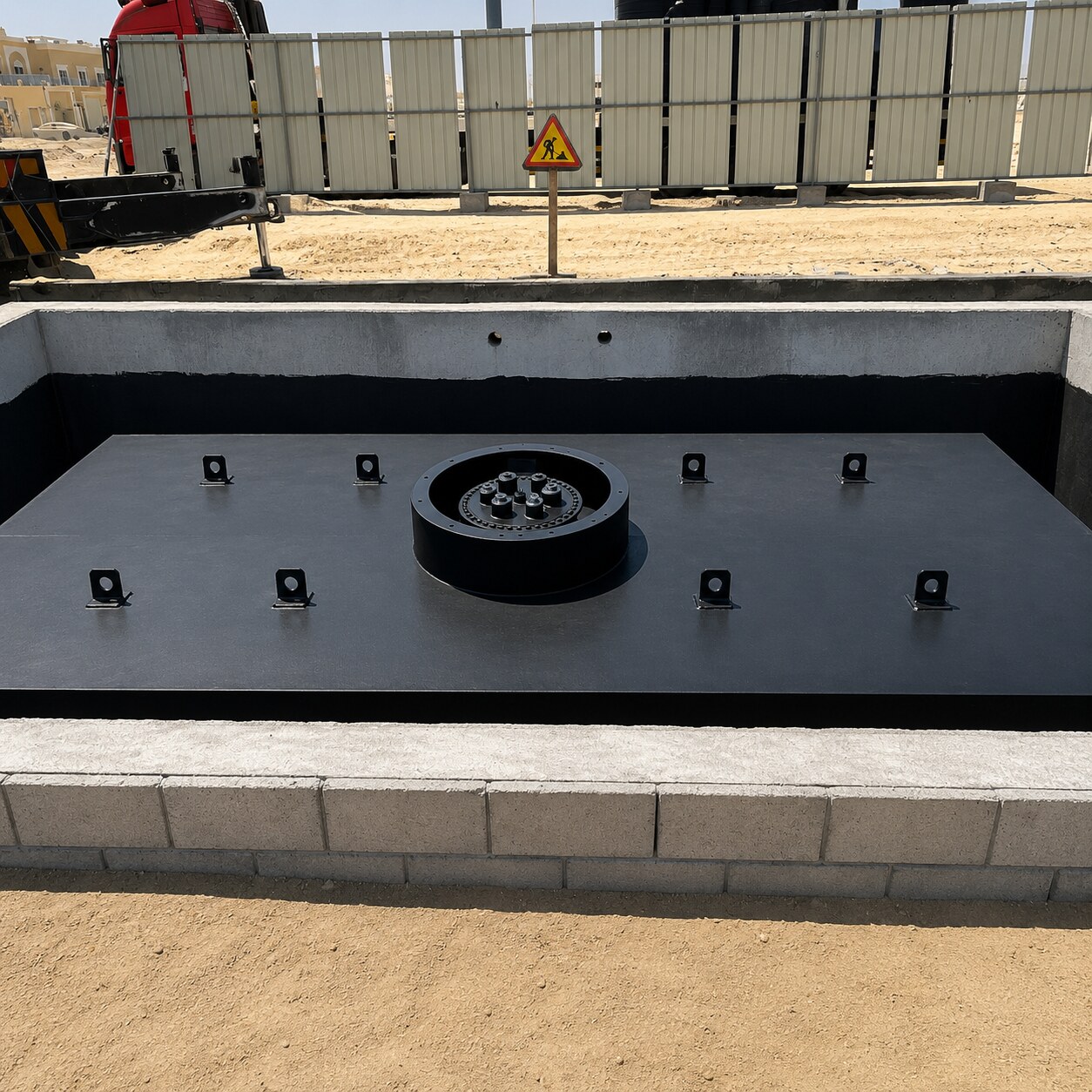
Once the tank reaches the site, an equally important stage begins. This includes preparing the installation area, positioning the tank according to the design, completing the required connections, carrying out the necessary inspections and tests, and then completing the backfilling work in accordance with project requirements.
Technical materials available from APMI emphasize the importance of verifying tank integrity and checking connection points before backfilling. They also indicate that identifying a problem after backfilling can make corrective work more complex and costly.
The tank should therefore not be treated as a product separate from installation and piping activities.
How Does an Underground Fuel Tank Integrate with the Rest of the System?
The tank operates as part of an interconnected system that includes various components and activities, such as:
The tank itself
Filling and withdrawal points
Measurement and monitoring systems
Fuel piping
Connection points and fittings
Leak-detection systems, depending on the system design
Pumps and associated operating equipment
Installation, testing, and commissioning activities
Selecting the right tank should therefore take place alongside an understanding of the complete system in which it will operate, rather than in isolation from the other project elements.
At Arabian Pumps and Mechanical Industries (APMI), the company's capabilities include the engineering and manufacturing of fuel tanks, the installation of fuel systems and piping, and project integration, installation, and commissioning according to the agreed scope.
What Mistakes Should Be Avoided When Selecting or Installing an Underground Tank?
Some of the most common mistakes that can affect project success include:
Selecting the tank based on price alone
Failing to identify the stored liquid before design begins
Overlooking site conditions and installation requirements
Failing to assess corrosion-protection requirements properly
Neglecting leak-detection and monitoring systems when required
Installing piping without considering the requirements of the complete system
Failing to complete the required inspections and tests before backfilling
APMI's technical materials highlight the importance of installation depth, corrosion protection, piping installation, leak-detection systems, and tank testing before backfilling.
Is a Larger Tank Always the Better Choice?
Not necessarily. The appropriate tank is one whose capacity, design, and configuration match the project's actual requirements.
Choosing more capacity than necessary may result in unnecessary cost and inefficient use of space. Selecting less capacity than required for operations may create future project limitations.
Capacity should therefore be determined based on the nature of the application, consumption rate, operating requirements, and required storage period—not on the assumption that a larger tank is always better.
How Do I Choose the Right Fuel Tank for My Project?
The selection process can be summarized through several essential questions:
Will the tank be installed underground or above ground?
What type of liquid will be stored?
What are the site's characteristics and operating conditions?
Does the project require a single-wall or double-wall tank?
What are the filling, withdrawal, measurement, and monitoring requirements?
Which standards and regulations must the project satisfy?
Which other components must be integrated with the tank?
When these questions are answered before the tank is approved, the decision becomes more accurate and the likelihood of costly modifications during execution is reduced.
Frequently Asked Questions About Underground Fuel Tanks
Are All Underground Fuel Tanks Certified to UL 58?
No. UL 58 is one of the standards used for underground steel tanks intended for flammable and combustible liquids. Other standards apply to tanks made from different materials or using different designs. The appropriate standard must therefore be identified according to the tank type and application.
Is a Double-Wall Tank Safer Than a Single-Wall Tank?
A double-wall tank provides secondary containment that can add an extra level of protection. However, the appropriate tank type depends on project requirements, applicable regulations, and site conditions. There is no universal rule that one configuration is suitable for every application.
Can an Underground Fuel Tank Be Customized for a Specific Project?
Custom solutions can be developed according to project specifications, operating requirements, site conditions, and engineering constraints, provided the design remains within the scope of the applicable standard and certification.
What Should Be Inspected Before the Tank Is Backfilled?
The required inspections and tests must be completed, and the integrity of the tank, its connections, and associated components must be verified before backfilling, in accordance with the applicable design, installation requirements, and standards.
Can Fuel Piping Be Installed with an Underground Fuel Tank?
Yes. The tank can be integrated with fuel systems and piping as part of a complete solution according to the project scope. This helps coordinate the tank with the remaining fuel-system components from the design and execution stages onward.
Conclusion
Underground fuel tanks are more than a means of storing fuel below ground level. They are a fundamental part of a fuel system that must be designed and implemented according to the nature of the project, site conditions, operating requirements, and applicable standards.
The correct selection process begins with understanding the project as a whole, followed by determining the tank type, configuration, and applicable standard, and ensuring that the tank integrates properly with piping, measurement and monitoring systems, and installation and inspection activities before operation.
The right tank is not necessarily the largest or most expensive. It is the tank designed specifically around the requirements of your project.